
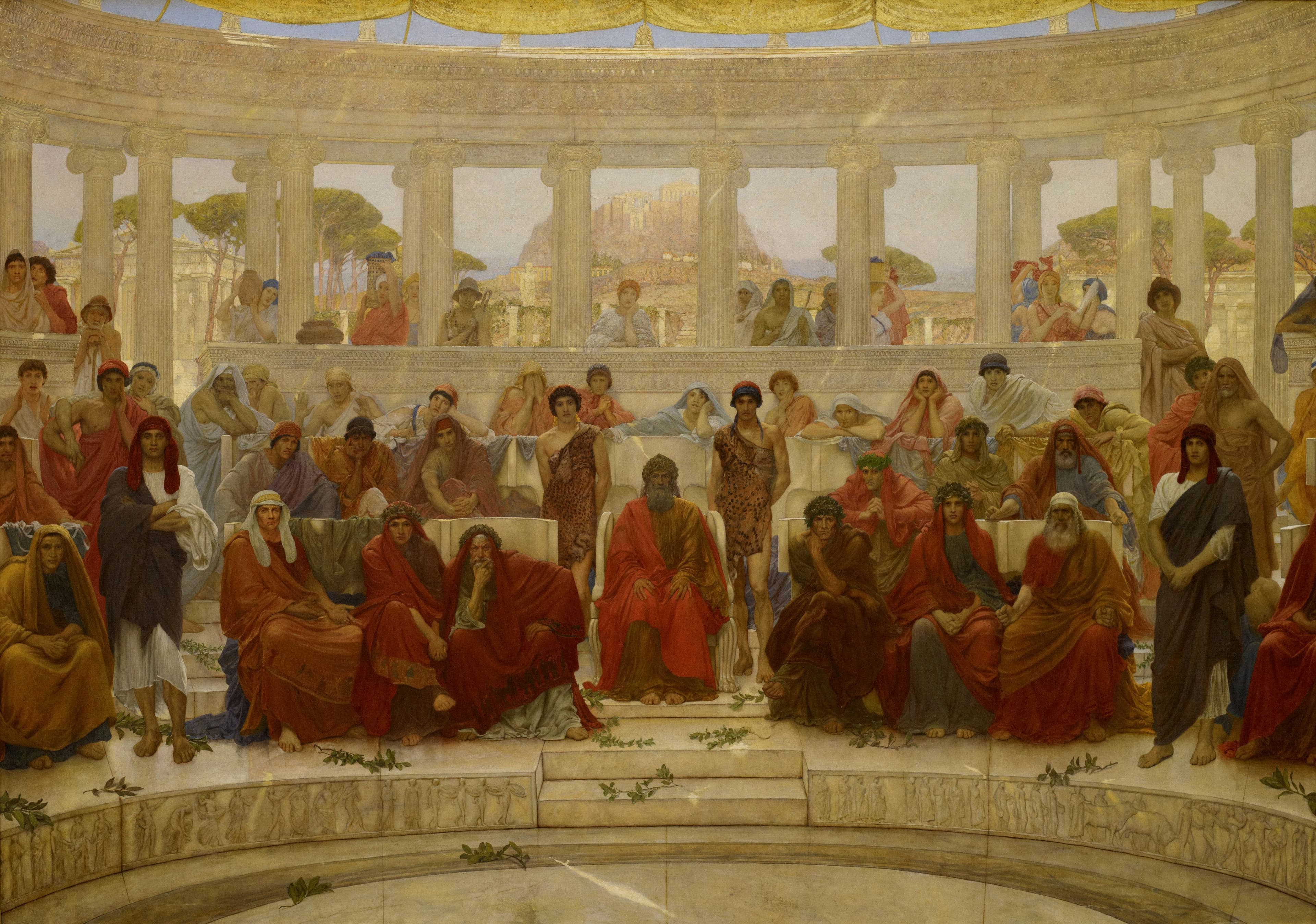
Sometime in the fourth century BC, Theophrastus sat down and wrote thirty short sketches of recognizable human types. The Flatterer. The Chatterbox. The Late Learner. The Man of Petty Ambition. They are two hundred words each, they are unkind in a very well-mannered way, and they are still funny after twenty-three centuries, which is a better run than most things.
He was denied the one setting that would have suited him best. Here, in the spirit of remedy, is the post-award kickoff meeting.
The Program Director Who Has Already Started Spending. The award was announced in March. He began work in April, because the community does not schedule its needs around execution dates. The agreement was countersigned in June. He does not understand why the finance office keeps returning to a date he regards as ceremonial, and he is a little wounded by the implication. He is not reckless. He is responsive, which in grant administration is a nearly identical condition with a completely different documentation requirement. The question of pre-award costs will be settled in about eleven months by a person he will never meet.
The Finance Officer Who Has Read the Notice of Award. There is one of these per organization. She is the only human present who knows the period of performance, the indirect cost provision, and which of the three attachments is actually incorporated by reference. She has three questions. All three are load-bearing. She will get through the first and roughly half of the second before someone asks whether the logo should go in the upper left.
The Subrecipient on Speakerphone. Present in the sense that a dial tone is present. Contributes "sounds good" at minute nine and again at minute thirty-one, which are the only two moments anyone remembers them being there. They have not seen the agreement. They have not been told there is a monitoring plan, because there is not yet a monitoring plan. They will next be heard from in fourteen months, when someone requests their single audit reporting package and discovers a voicemail box that is full.
The Person Taking Notes. The notes are, honestly, excellent. Timestamped, attributed, action items in bold. They will be circulated Thursday to eleven recipients, opened by two, and then located again twenty-six months later by an auditor who wants to know who approved the reallocation between object classes. At that moment this document will be worth more than everything else produced in the meeting combined. Nobody in the room knows this. Nobody has thanked them. They are, arguably, the only person here doing post-award administration.
The Executive Director Who Leaves at Minute Fifteen. Arrives with real warmth. Speaks for four minutes about what this award will mean for people who are not in the room, and is entirely, movingly correct. Departs before the discussion of the indirect cost rate, which is the part of the meeting that determines whether the organization can afford to do this again. The four minutes will be quoted in the final report. The departure will be felt in month nine.
The New Hire. Hired on the grant. Starts Monday. Is here to be introduced, waves, says nothing. Statistically, this is the person who will still be at the organization on the day of closeout, and who will therefore inherit every one of the decisions being made in the fifteen minutes after they stopped following the conversation. They are being handed a building whose foundation is being poured in a room where they have no speaking part.
The joke in Theophrastus was never that his characters were fools. It is that each of them is behaving with perfect internal logic, and the comedy is entirely in the collision. So it is here. The program director is doing the mission. The finance officer is doing the compliance. The executive director is doing the leadership. Every one of them is right.
The meeting still fails, and it fails for a structural reason rather than a human one: the kickoff is where a grant's entire documentation posture gets set for the next three years, and it is chaired by whoever happened to book the room. There is no agenda item called "who owns the evidence." So nobody does, and the answer defaults, silently, to the person taking notes, who was not consulted and is not being paid for it.
Which suggests a small experiment for your next one.
Before anything else on the agenda, ask out loud: who is keeping the file? Then stop talking and let it get uncomfortable.
The length of the pause is your risk assessment.
