
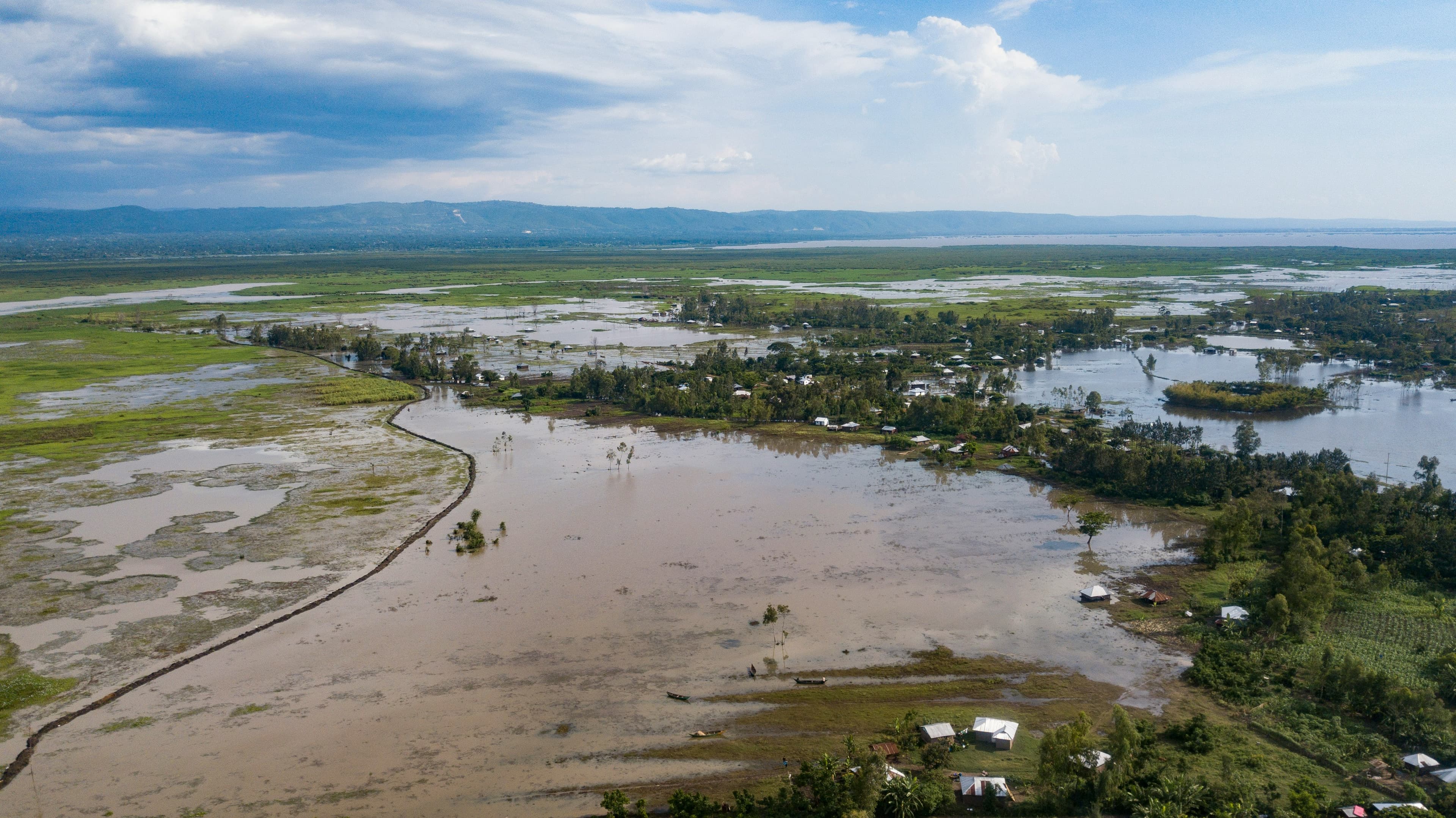
As of this week, Gov. Gretchen Whitmer has placed more than 40 Michigan counties, plus the cities of Ann Arbor and Kalamazoo, under a state of emergency in response to the statewide flooding that began with prolonged rainfall and rapid snowmelt starting April 12. A levee on the Little Black River breached. Crews are still working around the clock to protect the Cheboygan Lock and Dam Complex. Iron and Marquette counties were added to the declaration just this week.
For local governments, school districts, rural electric cooperatives, hospitals, houses of worship, and private nonprofits across the state, the immediate focus is, understandably, keeping people safe and getting operations back online.
But there's a second clock already running — one that matters enormously in six, twelve, and twenty-four months: the documentation clock for federal reimbursement.
If you wait for a federal disaster declaration before you start tracking costs, you've already lost ground. And in our experience working with grant-funded organizations, poor early documentation is one of the most common reasons eligible applicants later get de-obligated, audited, or denied reimbursement entirely.
This post is a plain-language walkthrough of where the federal funding process actually stands for this event, what programs your organization may eventually be able to tap, and — most importantly — what you should be doing right now, before the paperwork catches up with you.
Where the federal process actually stands
Let's be precise, because the terminology gets muddled in news coverage.
Michigan has a state-level emergency declaration in place for 40+ counties. That is a gubernatorial action and it unlocks state resources, suspends certain regulations, and authorizes state agencies to assist local response.
As of today, there is no federal major disaster declaration for the April 2026 flooding. The only pending federal request from Michigan is for the March 6 tornadoes in Branch, Cass, and St. Joseph counties — a separate event.
Before a federal declaration can happen for the flooding, the state has to:
- Complete Preliminary Damage Assessments (PDAs) jointly with FEMA and local officials
- Demonstrate that the scope of damage exceeds state and local response capacity
- Have the Governor submit a formal request to the President
- Have FEMA review and advise the President, who makes the final call
This typically takes weeks, sometimes months. And it's also worth noting: not every state emergency results in a federal declaration. The damage assessments have to meet per-capita and aggregate cost thresholds.
Why this matters for your organization: you don't get to wait for certainty. FEMA reimbursement is only available for costs that are properly documented from the time of the incident forward. Costs incurred during the response and recovery — staff overtime, contractor invoices, emergency protective measures, equipment use — may be eligible, but only if you can later prove each one was disaster-related, reasonably priced, and procured in compliance with federal rules.
The programs your organization should know about
If a federal declaration is issued for the April flooding, several funding streams potentially become available. Here's a quick orientation.
FEMA Public Assistance (PA) — the big one for governments and nonprofits
PA is the program most relevant for local governments, school districts, and certain private nonprofits. It reimburses eligible costs for debris removal, emergency protective measures, and permanent restoration of damaged facilities. The federal cost share is typically at least 75%.
PA work is organized into seven categories:
Emergency Work (immediate threat):
- Category A — Debris removal
- Category B — Emergency protective measures (sandbagging, evacuation support, emergency operations center costs, overtime for first responders, etc.)
Permanent Work (restoration):
- Category C — Roads and bridges
- Category D — Water control facilities (dams, levees, drainage)
- Category E — Buildings and equipment
- Category F — Utilities (including, per recent FEMA policy, nonprofit electric cooperatives in some cases)
- Category G — Parks, recreation, and other facilities
Eligible applicants include state, tribal, and local governments, and certain private nonprofits that provide "critical services" (power, water, sewer, communications, medical) or "essential social services" (education, custodial care, emergency, food, shelter, rehabilitation, temporary housing, assisted living, and a handful of others). Houses of worship are eligible as PNPs in many cases, which is a change many smaller faith-based organizations still don't realize.
One important note: PAPPG Version 5 — FEMA's Public Assistance Program and Policy Guide — applies to all disasters declared on or after January 6, 2025. If a federal declaration is issued for this event, Version 5 is what will govern your project worksheets, your procurement, your documentation, and your closeout. If the grants staff at your organization are still operating from Version 4, that's a gap to close.
Hazard Mitigation Grant Program (HMGP)
When a federal disaster is declared, a percentage of the total federal spend also becomes available through HMGP — funding specifically for projects that reduce the risk of future disaster damage. Elevating structures, acquiring flood-prone properties, relocating critical infrastructure, and upgrading stormwater systems are all eligible. The federal cost share is typically 75%.
HMGP is competitive and runs through the state (the Michigan State Police, Emergency Management and Homeland Security Division administers it in Michigan). It has a longer application window than PA, but the projects that win are the ones with mature planning, benefit-cost analyses, and clean environmental documentation already in hand.
Flood Mitigation Assistance (FMA)
Separate from post-disaster grants, FMA is an annual competitive program that funds projects to reduce flood risk to structures insured under the National Flood Insurance Program. Federal share is typically 75%, and up to 100% for properties designated as Severe Repetitive Loss. Notices of Funding Opportunity open each year, generally early-fall through mid-winter.
SBA Disaster Loans
If IA is declared, the Small Business Administration offers low-interest disaster loans to homeowners, renters, businesses, and private nonprofits. These aren't grants — they're loans — but for many nonprofits they're the fastest path to working capital during the recovery period.
Individual Assistance (IA)
Aimed at individuals and households rather than organizations, but worth flagging: if IA is declared in your county, you should be prepared to direct affected residents, staff, and program participants to DisasterAssistance.gov or 1-800-621-FEMA.
What your organization should be doing right now
Whether or not a federal declaration ever comes through for this event, these steps are all upside. They cost you nothing if funds don't arrive, and they make the difference between full reimbursement and disallowed costs if they do.
1. Stand up a separate cost-tracking code today
This is the single most important thing. Every hour of staff time, every contractor invoice, every piece of equipment, every fuel purchase, every emergency purchase order related to the flood response should be coded to a dedicated project number — separate from your regular operating accounts. Federal auditors will look for this. If you can't show a clean separation, even clearly eligible costs can get denied.
2. Start a decision log
Who authorized what, when, and why. When you waived a competitive bidding requirement under emergency procurement rules, document it. When you chose one vendor over another, document why. When you extended staff overtime authorization, document the approval. 2 CFR 200 (the Uniform Guidance that governs federal awards) requires that federal recipients maintain "records sufficient to detail the history of procurement." Reconstructing this after the fact is where organizations lose money.
3. Photograph everything, with metadata
Damaged facilities, high-water marks, debris fields, equipment in use, emergency work in progress. Smartphone photos with GPS and timestamp metadata enabled are admissible documentation for damage inventories and project worksheets. Take more than you think you need. Repeat for each site and each day of the response.
4. Preserve your procurement paper trail
Any purchase you make during the emergency needs to comply with 2 CFR 200.318–200.327 (the federal procurement standards) to be reimbursable — even if you don't know yet whether you'll be submitting for reimbursement. That means: written procurement procedures, documented cost/price analysis, documentation of why you selected the vendor you selected, and retention of all solicitation materials and responses.
The Michigan State Police EMHSD publishes a list of the "Top 10 Procurement Under Grant Mistakes That Can Lead to Loss of FEMA Public Assistance Funding." It's worth pulling up and circulating internally right now, not after the declaration.
5. Inventory your insurance before you claim anything
FEMA is the payer of last resort. Any eligible cost that is covered — or should have been covered — by insurance gets deducted from your reimbursement. Pull every applicable policy: property, business interruption, vehicle, cyber, flood. Document your deductibles and sublimits. Note any policies that lapsed or where coverage was denied. You'll need all of this for the Insurance Summary step of the PA process.
6. Identify and designate your applicant agent
For PA, each eligible organization must designate a Primary and Alternate Applicant Agent — the authorized signers who will submit your Request for Public Assistance (RPA) through FEMA's Grants Portal at grantee.fema.gov. Figure out who these people are now, make sure they have active accounts in the portal, and make sure they have the authority (often via board resolution or equivalent) to obligate the organization.
7. Read your local hazard mitigation plan
HMGP eligibility requires that your jurisdiction have a FEMA-approved Local Hazard Mitigation Plan. Pull it out. If it's expired or expiring, flag it to leadership today. Projects that are already identified in a current hazard mitigation plan are far more competitive for HMGP funding than ones developed from scratch.
8. Write the impact story while it's fresh
This is underrated. Six months from now, when you're preparing narrative sections for project worksheets, applying for supplemental philanthropic grants, or briefing your board, the specific, concrete details of what your organization did in the first days of this event will be hard to reconstruct. Assign someone — a communications lead, a program director, even a volunteer — to capture the human story: who you served, what you delivered, what would have happened without your response. This documentation is the raw material for every future funding ask you make.
The compliance burden is the point, actually
Here's the frustrating truth about disaster grant funding: the organizations that most need the money are often the ones least able to navigate the compliance process. The PAPPG is 400+ pages. The Uniform Guidance is dense. Project worksheets require extensive backup. Procurement rules are unforgiving.
And yet the federal system is built on the premise that public funds carry public accountability. There is no version of this where documentation is optional, shortcuts are safe, or "we'll figure it out later" ends well.
What you can do is front-load the discipline. The organizations that come out of disaster recovery in the strongest shape are the ones that treated the first 30 days of documentation as seriously as they treated the first 30 days of response. That means standing up systems, assigning clear ownership, and building an evidentiary record that will hold up to FEMA, HUD, state monitors, and your independent auditor — all of whom may eventually have a hand in reviewing how your organization used recovery funds.
Grant execution, done well, isn't a tax on your mission. It's how you protect the resources you need to keep doing the mission.
Helpful links
- Michigan 2026 Statewide Flooding (official state updates, damage self-reporting): michigan.gov/msp/divisions/emhsd/2026-statewide-flooding
- FEMA Public Assistance: fema.gov/assistance/public
- FEMA Grants Portal (for RPAs and applicant portal access): grantee.fema.gov
- PAPPG Version 5: available via fema.gov
- 2 CFR 200 (Uniform Guidance): ecfr.gov
- Michigan HMGP (administered by MSP/EMHSD): michigan.gov/msp
- DisasterAssistance.gov (for individuals and households): 1-800-621-FEMA
TideWatch builds post-award execution and compliance software for state and local governments, school districts, and nonprofits. If your organization is preparing for a potential FEMA Public Assistance application or wants to tighten up its grant documentation practices before the next audit, we'd be glad to talk. This post is informational and does not constitute legal, accounting, or grant compliance advice — organizations should consult with their own counsel, auditors, and state emergency management contacts before making decisions about eligibility or reimbursement.
