
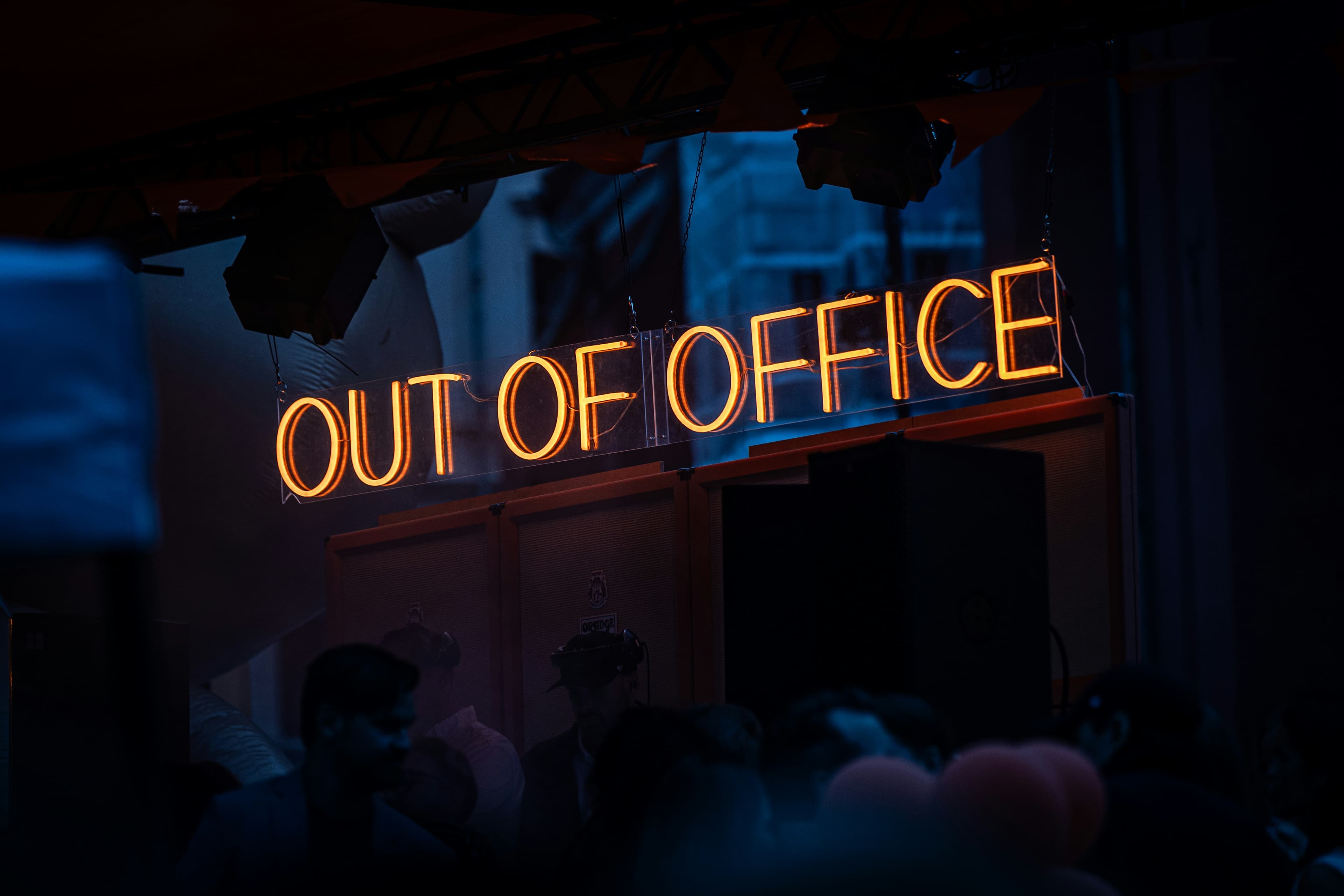
The out-of-office reply is the only document in a grants office that nobody reviews before it goes out. It is not approved, versioned, or routed for signature. It is composed in about forty seconds by a person who is already, spiritually, in the parking lot.
This makes it the most candid record the profession produces.
What follows is a composite: one grants office, one federal fiscal year, thirteen automatic replies. No actual inbox was harmed. Read in order, they tell the whole story of the year. The annual report tells a different one, with better photographs.
October 2. Thank you for your message. I am out of the office recovering from September. I will return Monday and will be glad to help with your request, provided it does not contain the phrase "one more drawdown."
November 12. I am attending a conference on federal grant compliance. Nine of the eleven sessions concern the proposed rule. I will return with a tote bag, a lanyard, fourteen pages of notes, and no clearer idea of when anything takes effect than when I left.
December 22. I am out until January 4. If your question concerns the continuing resolution, I do not know. If it concerns the next continuing resolution, I also do not know, but with less surprise.
January 13. I am in the office but unavailable, which is a different thing, and I ask that you respect the distinction. I am reconciling the first quarter. I am aware the first quarter ended in December. Please do not bring it up again.
February 17. I am out today. For budget questions, please contact Dana. For questions Dana cannot answer, please contact Dana's voicemail, which is where Dana has gone.
March 19. I am on a site visit. The site has no cell service, which the program director describes as "part of its charm" and which I have come to understand as the reason the timesheets are always late.
April 9. I am out of the office. If you are the auditor: welcome. The documents you requested are in the shared drive, in the folder labeled FINAL. Please disregard FINAL_v2, FINAL_revised, and FINAL_actual_use_this_one. There is also a folder labeled "old." It is the newest folder. I cannot explain this and will not be taking questions.
May 28. I am on vacation for the first time since the equipment threshold was $5,000. My laptop is at home, in a drawer, under a towel. I know exactly which drawer.
June 30. Today is the end of the state fiscal year, which is not the federal fiscal year, which is not our fiscal year, which our board moved to March in 2014 for reasons nobody wrote down. The foundation runs on the calendar year, as if that were a normal thing to do. I am in a small room with a whiteboard, trying to determine what year it is. I will respond when I have an answer I can defend.
July 21. I am away from my desk. The program director has asked whether we can "move some money around." I have gone for a walk. I will return once I have written a reply that includes the words "prior approval" in a tone that does not end the working relationship.
August 26. I am in the office but have been asked not to answer email until I finish the budget-to-actuals. They show 61 percent of the award spent with 35 days left in the period of performance. Leadership has asked me not to call this a crisis. I am calling it "an opportunity to spend thoughtfully and quickly," which is a phrase I invented this morning and already regret.
September 29. I am not out of the office. I have not been out of the office since Labor Day. This reply exists only to explain that I cannot answer email while I confirm that every cost on our largest award is incurred by September 30, and documented well enough that a stranger in 2028 will understand why we received eleven folding tables on the same afternoon. The tables are allowable, allocable, and reasonable. I have a memo. The memo has a memo.
If you are the vendor with the folding tables: they need to arrive by tomorrow. I say this with my whole heart.
October 1. Happy New Year. I am out of the office. The fiscal year has ended and I have no further comment at this time. I will be available to discuss the final reports in approximately 119 days.
Read them again and the shape of the year is plain. It is not twelve months. It is one month, September, preceded by eleven months of other people saying there is plenty of time.
The funny one is August. It is also the only one that was preventable, and not in August. An award that is 61 percent spent with five weeks left did not get that way in the summer. It got that way in February, quietly, while everyone was busy with the county.
So here is the Monday instruction, delivered before your own auto-reply goes on. Pull the budget-to-actuals for every award whose period of performance ends in the next six months. For each one, compare the share of the budget spent to the share of the period that has passed. If any of those pairs looks like August, it is still February for that award. You have time to fix it slowly, with a memo you will not need a second memo for.
Then set the out-of-office. Make it honest. Nobody reviews it anyway.
For everyone whose October 1 auto-reply is already drafted and sitting in a text file: TideWatch salutes you. Turn it on. Go outside.
